Item Rarity Explained: Colors, Stat Multipliers, and Costs
How item rarity works in Palworld: the five colour bands, what each tier adds to attack and defence, the hidden +12% ranged damage on Legendary armour, what higher rarities cost to craft, and the real drop rates behind every band.
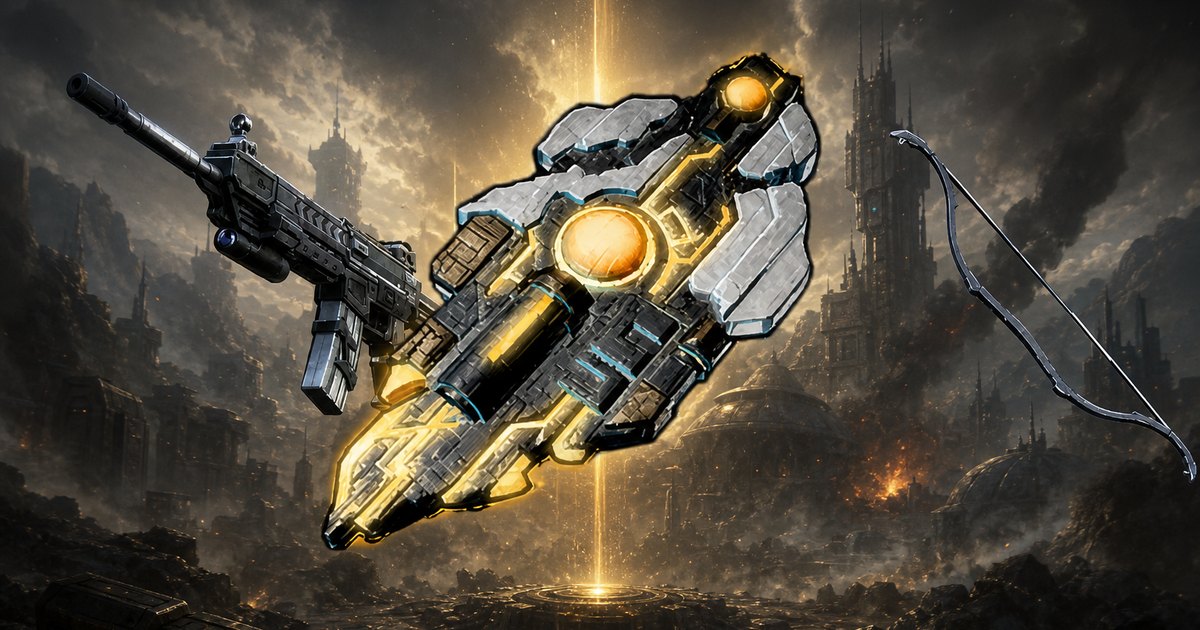
Every weapon, armour piece, schematic and consumable in Palworld sits in one of five rarity bands, and the colour behind the icon is the fastest read you get on whether something is worth carrying home. This guide covers all five tiers, exactly how much attack and defence each step adds, the hidden bonus only rare armour carries, what the higher tiers cost to build, and the real drop rates behind each band.
The Five Rarity Tiers
Rarity is stored as a number from 0 to 4 and painted onto the icon background, so you can sort a full chest by colour without reading a single tooltip. Across the game's 2,377 catalogued items the bands are close to evenly split — Common is the biggest bucket only because raw materials, ammo and building junk all live there. Selecting an item opens the stat window, which spells out the same tier in words. On this site the tier shows up as a star rating in the page title, so Assault Rifle (4★) and Assault Rifle (0★) stay separate pages instead of one blurred entry.
| Rarity | Icon colour | Star rating here | Items in this band | What it signals |
|---|---|---|---|---|
| Common | Grey | 0★ | 539 | Base craft, raw material or ammo — the version the tech tree hands you |
| Uncommon | Green | 1★ | 410 | First upgrade step; on gear this is where bonus passives start |
| Rare | Blue | 2★ | 512 | Mid-ladder; most accessories and the Legendary Sphere sit here |
| Epic | Purple | 3★ | 501 | Second-best gear tier and the band most skill fruits fall into |
| Legendary | Gold | 4★ | 415 | Top of every ladder — either a 3% drop or five combines away |
 How Rarity Changes Weapon Stats
On weapons, rarity moves attack, magazine size and durability all at once. The Assault Rifle is the cleanest example because every tier exists as its own build: attack climbs from 320 to 560, the magazine grows from 20 rounds to 30, and durability nearly doubles. That works out to ×1.25, ×1.4, ×1.6 and ×1.75 on attack as you step up the ladder. The vendor value tracks it too — a Legendary copy is worth 120,000 gold against 57,600 for the Common one, so a spare Legendary is a genuinely good thing to sell.
| Rarity | Weapon | Attack | Magazine | Durability | Gold value |
|---|---|---|---|---|---|
| Common | 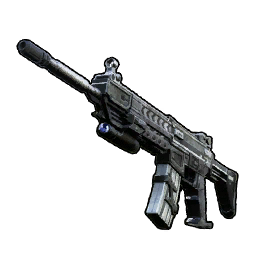 Assault Rifle (0★) Assault Rifle (0★) | 320 | 20 | 3,000 | 57,600 |
| Uncommon | Assault Rifle (1★) | 400 | 24 | 3,000 | 72,050 |
| Rare | Assault Rifle (2★) | 448 | 26 | 4,000 | 88,800 |
| Epic | Assault Rifle (3★) | 512 | 28 | 5,000 | 103,250 |
| Legendary | Assault Rifle (4★) | 560 | 30 | 6,000 | 120,000 |
 The Multiplier Is Per Weapon, Not One Global Curve
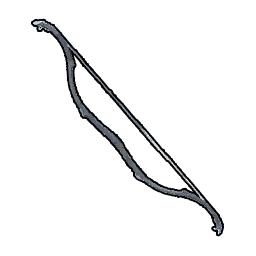
This is the part most rarity explainers get wrong. There is no single ladder that every gun follows — each of the 52 weapons with a full rarity ladder carries its own curve, and the spread is huge. The Old Bow multiplies its damage by 3.8 between Common and Legendary. The late-game showpieces barely move: Charge Rifle, Beam Launcher, Mechanical Bow, Heavy Assault Rifle and Laser Sword all cap out at a flat +20%.
The practical read: hunting Legendary schematics pays off most on the mid-tier guns you already use, and least on the endgame hardware that was already strong. Attack numbers only mean anything against other weapons of the same class — a handgun's 625 and a rocket launcher's 14,000 are measured on completely different scales — but the gain column compares fine across the whole table, because it is each weapon against itself.
| Weapon | Class | Common attack | Legendary attack | Legendary gain |
|---|---|---|---|---|
| Old Bow | Bow | 65 | 247 | ×3.80 |
 Old Revolver Old Revolver | Handgun | 600 | 1,500 | ×2.50 |
 Handgun Handgun | Handgun | 250 | 625 | ×2.50 |
 Core Eject Shotgun Core Eject Shotgun | Shotgun | 230 | 575 | ×2.50 |
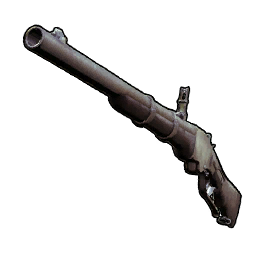 Single-Shot Rifle Single-Shot Rifle | Rifle | 1,100 | 2,310 | ×2.10 |
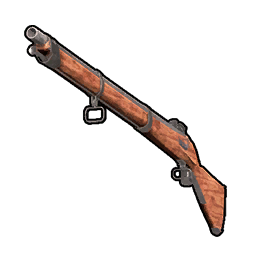 Musket Musket | Rifle | 1,000 | 2,000 | ×2.00 |
| Assault Rifle | Rifle | 320 | 560 | ×1.75 |
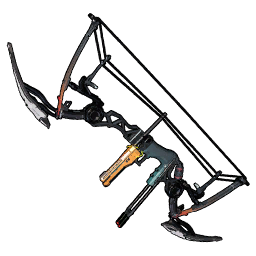 Advanced Bow Advanced Bow | Bow | 5,800 | 8,700 | ×1.50 |
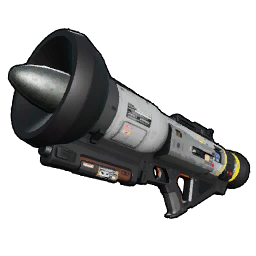 Rocket Launcher Rocket Launcher | Launcher | 10,000 | 14,000 | ×1.40 |
 Heavy Assault Rifle Heavy Assault Rifle | Rifle | 1,615 | 1,938 | ×1.20 |
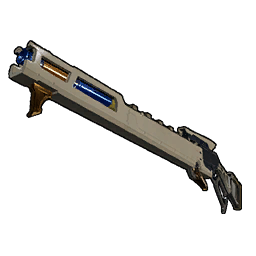 Charge Rifle Charge Rifle | Rifle | 12,500 | 15,000 | ×1.20 |
 Beam Launcher Beam Launcher | Launcher | 14,000 | 16,800 | ×1.20 |
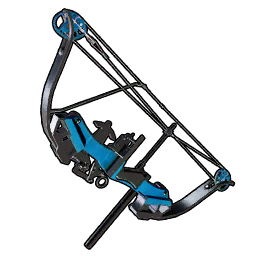 Mechanical Bow Mechanical Bow | Bow | 20,000 | 24,000 | ×1.20 |
 Laser Sword Laser Sword | Melee | 2,000 | 2,400 | ×1.20 |
 How Rarity Changes Armor
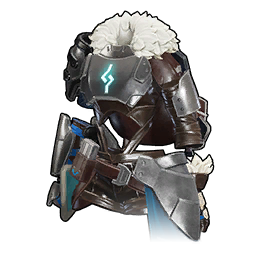
Armour follows the same idea with a flatter curve on the stat line and a much bigger jump on durability. Refined Metal Armor is a good mid-game reference: defence goes 150 → 240 and HP goes 500 → 800, both a ×1.6 spread, while durability leaps from 1,500 to 7,000 — so the Legendary copy survives more than four times as long between repairs. The 61 armour lines with a full ladder mostly land on that ×1.6 shape, but the ancient-material sets are stingier: Ancient Armor and Cold Resistant Hexolite Armor only reach ×1.3, because their Common versions already start high.
The temperature-resistance lines never change with rarity. A Common heat-resistant chestpiece keeps you alive in the volcano exactly as well as the Legendary one — you are paying purely for defence, HP, durability and the bonus below.
| Rarity | Armour | Defense | HP | Durability | Built-in bonus |
|---|---|---|---|---|---|
| Common | 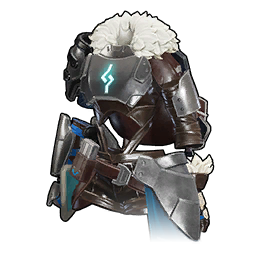 Refined Metal Armor (0★) Refined Metal Armor (0★) | 150 | 500 | 1,500 | — |
| Uncommon | Refined Metal Armor (1★) | 195 | 650 | 4,000 | Attack Up (S) Lv. 1 |
| Rare | Refined Metal Armor (2★) | 210 | 700 | 5,000 | Attack Up (S) Lv. 2 |
| Epic | Refined Metal Armor (3★) | 225 | 750 | 6,000 | Attack Up (S) Lv. 3 |
| Legendary | Refined Metal Armor (4★) | 240 | 800 | 7,000 | Attack Up (S) Lv. 4 |
 The Hidden Attack Bonus on Rare Armor
Here is the bit almost nobody mentions: every body armour above Common carries a free Attack Up (S) passive that scales with its rarity, and it boosts your ranged damage. Common gets nothing, then it steps +3%, +6%, +9% and +12%. It runs on all 28 armour lines that carry it, from Refined Metal Armor up to Ancient Armor. It stacks on top of whatever your weapon is doing, so a Legendary chestpiece is quietly a damage upgrade as well as a defence one — and it means a Legendary early-tier armour can out-earn a Common piece from the next tech tier if you fight with guns.
| Rarity | Passive on the armour | Ranged damage |
|---|---|---|
| Common | — | +0% |
| Uncommon | Attack Up (S) Lv. 1 | +3% |
| Rare | Attack Up (S) Lv. 2 | +6% |
| Epic | Attack Up (S) Lv. 3 | +9% |
| Legendary | Attack Up (S) Lv. 4 | +12% |
 The Five Hats Where Rarity Does Nothing
Five Pal-themed headpieces break the pattern completely — their defence and HP are identical at every tier, 20 and 60 flat from Common all the way to Legendary. Upgrading one is a pure cosmetic exercise, so spend the schematics elsewhere. The only stat that moves is the elemental resistance line, which turns into Dark resistance on every copy above Common regardless of what the base hat resisted.
| Headgear | Defense (0★ → 4★) | HP (0★ → 4★) | What actually changes |
|---|---|---|---|
| Dazzi Hat | 20 → 20 | 60 → 60 | Resistance flips to Dark above Common |
 Ribbuny Headband Ribbuny Headband | 20 → 20 | 60 → 60 | Resistance flips to Dark above Common |
 Swee Cap Swee Cap | 20 → 20 | 60 → 60 | Resistance flips to Dark above Common |
 Killamari Cap Killamari Cap | 20 → 20 | 60 → 60 | Nothing at all |
 Leezpunk Hood Leezpunk Hood | 20 → 20 | 60 → 60 | Nothing at all |
 Rarity and Drop Rates
Rarity is also a promise about how often something falls out of a Pal, and the ancient relic line proves it better than anything else in the game because all five tiers drop from the same 143 sources. From an ordinary wild Pal the chance halves and halves again as you climb: 10% for the Decayed Ancient Relic down to 2% for the Glistening Ancient Relic. Fight the Alpha version of that same species and every number multiplies by five, which is the single strongest argument for relic-farming Alphas instead of the wild population.
| Rarity | Relic | Wild Pal | Alpha version | Guaranteed-tier Pals |
|---|---|---|---|---|
| Common |  Decayed Ancient Relic Decayed Ancient Relic | 10% | 50% | 100% |
| Uncommon |  Dormant Ancient Relic Dormant Ancient Relic | 5% | 25% | 100% |
| Rare |  Gorgeous Ancient Relic Gorgeous Ancient Relic | 3.3% | 15% | 100% |
| Epic |  Glowing Ancient Relic Glowing Ancient Relic | 2.5% | 12.5% | 50% |
| Legendary | Glistening Ancient Relic | 2% | 10% | 25% |
The last column covers 67 Pals that hand over the bottom three relics every single kill and only start rolling dice at Epic — Kingpaca, Eikthyrdeer, Azurobe and Univolt are all in that group, which makes them far better relic routes than their rarity suggests. Two Alphas do even better than the standard boss multiplier, Silvance and Dandilord, both handing over the Glistening relic 20% of the time. Wispaw is the clearest before-and-after: 2% wild, 10% as an Alpha.







 Legendary Schematics Drop at Exactly 3%
The top of the schematic ladder is the strictest number in the game. 24 Legendary schematics each drop from exactly one Pal at a flat 3%, and there is no second source for any of them — no chest, no merchant, no dungeon container. That is roughly 33 kills for an average player before the schematic shows up, which is why building one at the Drafting Table is often faster than farming it. Across all 236 schematic lines, 92 exist at every rarity from Uncommon to Legendary, so most of your gear has a full ladder waiting to be climbed.










 Higher Rarity Costs More to Craft
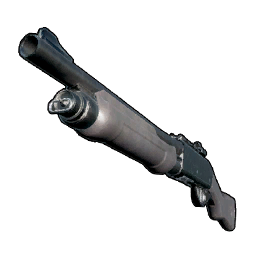
Owning the schematic is only half the bill. Higher tiers want more of every material and add a new one that the Common recipe never asks for: Ancient Civilization Parts, one per rarity step. The Pump-Action Shotgun shows the shape — Refined Ingot doubles from 30 to 60, and the Legendary build needs four Ancient Civilization Parts on top.
Craft time is the sneakier cost. The work value doubles at every step after the first, ending at 32 times the Common build, so a Legendary weapon ties up your best Handiwork Pals for a long stretch. Line up the best Handiwork Pals before you queue one, and read the Palworld crafting guide if you want the station-by-station breakdown.
| Rarity | Shotgun | Attack | Refined Ingot | Polymer | Carbon Fiber | Ancient Civilization Parts | Craft work |
|---|---|---|---|---|---|---|---|
| Common | Pump-Action Shotgun (0★) | 220 | 30 | 20 | 10 | — | 120,000 |
| Uncommon | Pump-Action Shotgun (1★) | 275 | 37 | 25 | 12 | 1 | 480,000 |
| Rare | Pump-Action Shotgun (2★) | 308 | 45 | 30 | 15 | 2 | 960,000 |
| Epic | Pump-Action Shotgun (3★) | 352 | 52 | 35 | 17 | 3 | 1,920,000 |
| Legendary | Pump-Action Shotgun (4★) | 385 | 60 | 40 | 20 | 4 | 3,840,000 |
 Consumables and Materials Use the Same Bands
Rarity is not just a gear thing. Plenty of item families are really one ladder wearing five names, and the colour tells you where each rung sits. Healing is the obvious one: Low Quality Recovery Meds restores *some* health, Recovery Meds a decent amount, High Quality Recovery Meds a lot, and the Epic-band Advanced Recovery Meds refills you almost instantly — with the shop value climbing 2,820 → 6,180 → 12,600 → 20,520 to match.
Pal Souls run the same ladder for statue upgrades, treasure maps carry their difficulty as a rarity, and skill fruits sit at Uncommon, Rare or Epic depending on how strong the move they teach is — no skill fruit in the game is Legendary. When you are not sure whether a stack is worth the weight, the colour is the answer.
| Ladder | Common | Uncommon | Rare | Epic | Legendary |
|---|---|---|---|---|---|
| Healing |  Low Quality Recovery Meds Low Quality Recovery Meds |  Recovery Meds Recovery Meds |  High Quality Recovery Meds High Quality Recovery Meds | Advanced Recovery Meds | — |
| Pal Souls | — |  Small Pal Soul Small Pal Soul |  Medium Pal Soul Medium Pal Soul |  Large Pal Soul Large Pal Soul |  Giant Pal Soul Giant Pal Soul |
| Treasure maps | 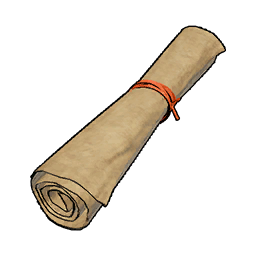 Treasure Map (0★) Treasure Map (0★) | 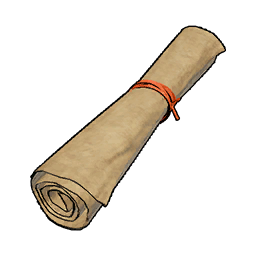 Treasure Map (1★) Treasure Map (1★) | Treasure Map (2★) | Treasure Map (3★) | Treasure Map (4★) |
| Ancient relics | Decayed | Dormant | Gorgeous | Glowing | Glistening |
Related Guides
Hubs and deeper reading:
- All Palworld Guides
- Palworld Item Database
- All Palworld Schematics
- How to Upgrade Schematics to Legendary at the Drafting Table
- Best Legendary Schematics and How to Get Them
- All Legendary Weapon Schematic Locations in Palworld
- Rare Drops List, Drop Rates, and Best Ones to Farm
- List of All Rare Pals: Rarity Tiers and How to Get Them
- Attack Stat Explained: Damage Formula and How to Raise It
- Defense Stat Explained: Damage Reduction and How to Raise It
- Palworld Salvaging Guide: How to Salvage and Best Loot