How to Trade Pals: Drops, Guild Storage, and Merchants
How to trade Pals in Palworld: the drop input that hands a Pal to another player, the guild storage both of you can reach, what level, stars and passives survive the handover, and all 52 Pals you can buy from merchants with prices.

Palworld has no trade window, so trading Pals means one of three things: dropping one for the player standing next to you, passing it through storage you both share, or paying a merchant for one. This guide covers all three routes, what the game requires for each, exactly what stays on a Pal when it changes hands, and every Pal you can buy with gold instead.
 Trading Pals at a Glance
The important thing to understand up front is that a Pal is not an item — it carries everything you invested in it, so a handover is worth far more than the gold value attached to it. There is no trade request, no confirmation screen between two players and no way to send a Pal to someone offline. Every method below is either physical (the Pal lands on the ground) or shared (both players can reach the same box), and the only one that crosses save files is the Global Palbox, which copies data rather than moving a Pal.
| What | Detail |
|---|---|
| Is there a trade window? | No — Palworld has no player-to-player trade UI |
| Fastest way to hand a Pal over | Drop it from the Party tab with R or the right stick |
| Trading through storage | Both players must be in the same guild |
| Guild members (default) | 20, raisable to 100 in world settings |
| Buying Pals for gold | Black Marketeers and regional Pal Merchants, 5 on the counter at a time |
| Pals you can buy in total | 52 merchant entries across the 6 stock pools |
| Sell price | One-twentieth of what the same Pal costs to buy |
| Across two save files |  Global Palbox only, and it copies rather than moves Global Palbox only, and it copies rather than moves |
 All Three Ways to Trade a Pal
Pick the route by who you are trading with. If the other player is standing in front of you, dropping is instant and needs nothing built. If you play together regularly, joining one guild removes the ceremony entirely — shared Pal storage means neither of you has to be online at the same time. Merchants are the fallback when nobody has the Pal you want, and the only one of the three that costs gold instead of goodwill.
| Method | Works with | What you need | The catch |
|---|---|---|---|
| Drop the Pal | Anyone standing nearby, guild or not | Nothing — it is a default input | First person to touch it takes it, so do it somewhere quiet |
| Shared Pal storage | Guild members only | Same guild, plus  Dimensional Pal Storage for a shared box Dimensional Pal Storage for a shared box | Requires joining their guild, which shares your bases too |
| Merchants | Yourself — you buy from an NPC | Gold, and the right merchant for the Pal | Random 5-Pal stock and prices that scale hard with level |
| Global Palbox | Your own other save files | Tech Lv 3 and one technology point | Copies genetic data — the original stays behind |
Trade Through the Palbox and Shared Storage
The clean way to trade with someone you play with often is to be in the same guild, because a guild owns its bases, its base Pals and its storage collectively. Once you are in, the Palbox at that base is reachable by both of you: one player deposits, the other withdraws, and nobody has to be standing there at the same moment. It also means everything else on that base becomes shared, so join the guild of people you actually trust rather than a stranger who offered you a Pal.
The upgrade worth building for a trading guild is Dimensional Pal Storage, which adds a second Pal box that every guild member can open. It costs 2 Ancient Technology Points at Lv 20 plus 20 Ingot, 40 Paldium Fragment and 5 Ancient Civilization Parts, and it can be flipped to private if you would rather use it as personal overflow. In a co-op world it turns one dedicated breeder into everyone's supplier — they park the results in the box, and the rest of the guild collects whenever they log in.
| Storage | Who can pull from it | Unlock | Cost |
|---|---|---|---|
| Palbox | Anyone in the guild that owns the base | Placed to found a base | Free — it is your first build |
| Dimensional Pal Storage | Every guild member, or private if you toggle it | Tech Lv 20 | 2 Ancient points, 20 Ingot, 40 Paldium Fragment, 5 Ancient Civilization Parts |
 Guild Chest Guild Chest | Every guild member, from any of your bases | Tech Lv 41 | 4 Ancient points — items only, not Pals |
 Hand a Pal Over Directly
The direct trade is a drop. Open the menu, switch to the Party tab, highlight the Pal, then press R on keyboard or click the right stick on controller — the Pal pops out onto the ground in front of you and the next player to interact with it owns it. That last part is the whole risk: a dropped Pal is not reserved for the person you meant it for, so do your handovers away from a busy spawn point rather than in the middle of a public lobby.
Because the drop carries the Pal's entire history, this is how a group skips work rather than just shares it. A five-star condensed hauler like Lunaris handed to a new player arrives condensed, and a bred Pal with a stacked passive set arrives with the passives intact — which is why most co-op worlds run one breeding specialist instead of four separate farms. The full input walkthrough, including what the game refuses to let you drop, is in how to drop items and Pals.
 Clear the Favorite Lock First
If the button does nothing, the Pal is favorited. Favoriting exists so you never hand away or release the mount you fly everywhere on, and it blocks the input silently instead of warning you. Select the Pal, tap the lock icon beside its Trust bar, and the drop works immediately — then re-favorite your own main flyer, because the same button that gives a friend a Pal is the one that loses you your Jetragon.
 What Transfers With the Pal
A traded Pal is the exact same individual, not a fresh copy, so everything stored on it comes along. That includes the levels you paid for, the condensing you ground out and the passive skills it rolled or inherited — which is what makes a good trade so much more valuable than the gold price on the same species. The one thing a trade never transfers is technology: a saddle still has to be researched by someone, though gear itself can be handed over separately.
| What the Pal keeps | Transfers? | Why it matters |
|---|---|---|
| Level | Yes | A Lv 45 Pal saves the recipient the entire grind — and costs 7.5x base value to buy at that level |
| Condensed stars | Yes | Four duplicates went into a 4★; the trade hands over all of them at once |
| Passive skills | Yes | The real prize in any bred Pal — check them before you agree to a trade |
| IVs | Yes | Fixed at capture or hatch and never rerolled — see the Palworld IV calculator |
| Equipped Pal gear | Hand it over separately | Saddles are droppable and weigh 0, so send them along with the Pal |
| Your Paldeck progress | No | Trading a Pal away does not undo the entry you already registered |
 Buy and Sell Pals From Merchants
Merchants are the trade route that always works, because the NPC never logs off. Two families sell live Pals: Black Marketeers, who stand at fixed spots and carry the strong regional roster, and the ordinary Pal Merchants in the desert and volcano regions. Each one puts 5 Pals on the counter at a time, rolled from its own pool, so the Pal you want may simply not be in stock on the day you arrive — rerolling vendor stock is the fix for that.
Price is base value multiplied by level: the multiplier starts at 1.65x at Lv 1 and climbs 0.15 per level, so the same Pal at the top of a merchant's band costs noticeably more than at the bottom. Pocketpair has never published the formula, so treat the gold figures below as very close rather than to-the-coin. Every fixed merchant position is pinned on our interactive map, where the merchant layer carries 12 pins including the four Black Marketeers.
| Merchant | Level band | Pals on the counter | Pool size | Price range |
|---|---|---|---|---|
 Black Marketeer (endgame) Black Marketeer (endgame) | Lv 50–55 | 5 | 8 | 13,887 – 30,352 |
 Black Marketeer (highlands) Black Marketeer (highlands) | Lv 42–48 | 5 | 8 | 8,237 – 23,359 |
 Black Marketeer (volcanic) Black Marketeer (volcanic) | Lv 35–40 | 5 | 9 | 3,328 – 21,832 |
| Black Marketeer (early) | Lv 20–30 | 5 | 11 | 3,722 – 17,478 |
 Desert Pal Merchant Desert Pal Merchant | Lv 40–45 | 5 | 8 | 4,620 – 13,010 |
 Volcano Pal Merchant Volcano Pal Merchant | Lv 30–35 | 5 | 8 | 2,442 – 9,882 |
Every Pal a Merchant Can Sell You
Here is the complete purchasable roster, grouped by the merchant that stocks it and sorted by value inside each pool. The price column spans the merchant's level band, so the low number is what you pay for the weakest roll and the high number for the strongest. Dualith at up to 30,352 gold is the single most expensive Pal any merchant carries, while the Volcano Pal Merchant's Kelpsea Ignis at 2,442 is the cheapest live Pal on any counter — and Gorirat Terra is the only Pal sold by two different merchants, which makes the Desert Pal Merchant the cheaper of the two by roughly 400 gold.
| Pal | Merchant | Base value | Price at the band |
|---|---|---|---|
| Warsect | Black Marketeer (Lv 20–30) | 2,913 | 13,108 – 17,478 |
 Mammorest Mammorest | Black Marketeer (Lv 20–30) | 2,220 | 9,990 – 13,320 |
 Helzephyr Helzephyr | Black Marketeer (Lv 20–30) | 2,109 | 9,490 – 12,654 |
 Elgrove Elgrove | Black Marketeer (Lv 20–30) | 2,041 | 9,184 – 12,246 |
 Mossanda Mossanda | Black Marketeer (Lv 20–30) | 1,475 | 6,638 – 8,850 |
 Katress Katress | Black Marketeer (Lv 20–30) | 1,356 | 6,102 – 8,136 |
 Robinquill Robinquill | Black Marketeer (Lv 20–30) | 1,335 | 6,008 – 8,010 |
 Beegarde Beegarde | Black Marketeer (Lv 20–30) | 1,166 | 5,247 – 6,996 |
 Tombat Tombat | Black Marketeer (Lv 20–30) | 1,147 | 5,162 – 6,882 |
 Dumud Dumud | Black Marketeer (Lv 20–30) | 995 | 4,478 – 5,970 |
 Wispaw Wispaw | Black Marketeer (Lv 20–30) | 827 | 3,722 – 4,962 |
| Moldron | Black Marketeer (Lv 35–40) | 2,911 | 19,649 – 21,832 |
 Relaxaurus Relaxaurus | Black Marketeer (Lv 35–40) | 2,365 | 15,964 – 17,738 |
 Ragnahawk Ragnahawk | Black Marketeer (Lv 35–40) | 2,263 | 15,275 – 16,972 |
 Blazehowl Blazehowl | Black Marketeer (Lv 35–40) | 1,794 | 12,110 – 13,455 |
 Pyrin Pyrin | Black Marketeer (Lv 35–40) | 1,464 | 9,882 – 10,980 |
 Bushi Bushi | Black Marketeer (Lv 35–40) | 1,442 | 9,734 – 10,815 |
 Incineram Incineram | Black Marketeer (Lv 35–40) | 1,325 | 8,944 – 9,938 |
 Wixen Wixen | Black Marketeer (Lv 35–40) | 1,284 | 8,667 – 9,630 |
 Leezpunk Ignis Leezpunk Ignis | Black Marketeer (Lv 35–40) | 493 | 3,328 – 3,698 |
| Relaxaurus Lux | Black Marketeer (Lv 42–48) | 2,685 | 20,943 – 23,359 |
 Sekhmet Sekhmet | Black Marketeer (Lv 42–48) | 2,638 | 20,576 – 22,951 |
 Gildra Gildra | Black Marketeer (Lv 42–48) | 2,529 | 19,726 – 22,002 |
 Palumba Palumba | Black Marketeer (Lv 42–48) | 2,529 | 19,726 – 22,002 |
 Menasting Menasting | Black Marketeer (Lv 42–48) | 2,469 | 19,258 – 21,480 |
 Beakon Beakon | Black Marketeer (Lv 42–48) | 1,934 | 15,085 – 16,826 |
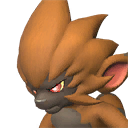 Gorirat Terra Gorirat Terra | Black Marketeer (Lv 42–48) | 1,284 | 10,015 – 11,171 |
 Lovander Lovander | Black Marketeer (Lv 42–48) | 1,056 | 8,237 – 9,187 |
| Dualith | Black Marketeer (Lv 50–55) | 3,113 | 28,017 – 30,352 |
 Wumpo Wumpo | Black Marketeer (Lv 50–55) | 2,591 | 23,319 – 25,262 |
 Mammorest Cryst Mammorest Cryst | Black Marketeer (Lv 50–55) | 2,424 | 21,816 – 23,634 |
 Icelyn Icelyn | Black Marketeer (Lv 50–55) | 2,277 | 20,493 – 22,201 |
 Quivern Quivern | Black Marketeer (Lv 50–55) | 2,081 | 18,729 – 20,290 |
 Cryolinx Cryolinx | Black Marketeer (Lv 50–55) | 1,987 | 17,883 – 19,373 |
| Lunaris | Black Marketeer (Lv 50–55) | 1,845 | 16,605 – 17,989 |
 Foxcicle Foxcicle | Black Marketeer (Lv 50–55) | 1,543 | 13,887 – 15,044 |
| Digtoise | Desert Pal Merchant (Lv 40–45) | 1,577 | 11,828 – 13,010 |
 Dinossom Lux Dinossom Lux | Desert Pal Merchant (Lv 40–45) | 1,543 | 11,572 – 12,730 |
| Gorirat Terra | Desert Pal Merchant (Lv 40–45) | 1,284 | 9,630 – 10,593 |
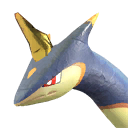 Surfent Terra Surfent Terra | Desert Pal Merchant (Lv 40–45) | 1,205 | 9,038 – 9,941 |
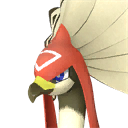 Dazemu Dazemu | Desert Pal Merchant (Lv 40–45) | 896 | 6,720 – 7,392 |
 Cawgnito Cawgnito | Desert Pal Merchant (Lv 40–45) | 770 | 5,775 – 6,352 |
 Needoll Needoll | Desert Pal Merchant (Lv 40–45) | 702 | 5,265 – 5,792 |
 Dazzi Dazzi | Desert Pal Merchant (Lv 40–45) | 616 | 4,620 – 5,082 |
| Vanwyrm | Volcano Pal Merchant (Lv 30–35) | 1,464 | 8,784 – 9,882 |
 Arsox Arsox | Volcano Pal Merchant (Lv 30–35) | 1,176 | 7,056 – 7,938 |
 Gobfin Ignis Gobfin Ignis | Volcano Pal Merchant (Lv 30–35) | 850 | 5,100 – 5,738 |
 Turtacle Turtacle | Volcano Pal Merchant (Lv 30–35) | 661 | 3,966 – 4,462 |
 Leezpunk Leezpunk | Volcano Pal Merchant (Lv 30–35) | 476 | 2,856 – 3,213 |
 Fuack Ignis Fuack Ignis | Volcano Pal Merchant (Lv 30–35) | 463 | 2,778 – 3,125 |
 Flambelle Flambelle | Volcano Pal Merchant (Lv 30–35) | 436 | 2,616 – 2,943 |
 Kelpsea Ignis Kelpsea Ignis | Volcano Pal Merchant (Lv 30–35) | 407 | 2,442 – 2,747 |
 What Selling a Pal Actually Pays
Selling runs on the same curve but pays out one-twentieth of the buy price, which makes offloading Pals one of the worst gold sources in the game. A Pal you paid 20,000 for returns around 1,000 if you sell it straight back, and levelling one before selling costs more in Training Crystals and food than the extra payout returns. Sell only Pals you were going to release anyway, and get your money from the actual gold farming methods instead — the full price list is in Pal buy and sell values.
Trading Pals Between Your Own Worlds
If the trade is with yourself — a new world, a friend's server, a dedicated server you just rented — the Global Palbox is the tool. It unlocks at technology Lv 3 for a single point and costs 3 Paldium Fragment, 5 Wood and 15 Stone, which is buildable in your first hour. Deposit a Pal and its data becomes available in every save you load, so a fresh character can start with a proper team instead of grinding one up again.
The distinction that trips people up is that it stores a copy of the Pal's genetic data, not the Pal itself. The original stays in your ordinary Palbox doing its job, and the version you withdraw elsewhere is a rebuild — which also means it is not a way to hand a Pal to another player, since only your own saves can read your box. For that, you are back to dropping or shared guild storage.
Trade Rules Worth Knowing First
Most failed trades come down to one of the same handful of rules rather than a bug. Run through this list before you agree to anything, especially with a player you do not know — a dropped Pal cannot be un-dropped, and a guild invite hands over more than most people realise.
- A dropped Pal belongs to whoever touches it first. Do handovers in a quiet spot, not at a fast travel point
- Favorited Pals cannot be dropped. Clear the lock on the one you are giving away and only that one
- Joining a guild shares your bases too, not just Pal storage — see how guilds, ranks and limits work
- There is no offline trade. Nothing is mailed or queued; both players are present, or the Pal sits in shared storage
- Merchant stock is random. Five Pals per counter from a pool of up to 11, so expect to reroll
- Buying is a bad deal on paper and often still worth it — 20,000 gold for a Pal you would otherwise hunt at level 50 buys back a lot of time
The Short Answer
To trade a Pal with another player, stand next to them, open the Party tab, highlight the Pal and press R or the right stick to drop it — clearing the favorite lock first if nothing happens. If you play together regularly, join one guild instead and pass Pals through the shared Palbox or Dimensional Pal Storage at Tech Lv 20, which works whether or not you are both online. If nobody has the Pal you want, the six merchant pools hold 52 buyable entries between them, from 2,442 gold for a Kelpsea Ignis to 30,352 for a Dualith. And to move Pals between your own saves, build the Global Palbox at Tech Lv 3.
Related Guides
Start here:
Trading and multiplayer: